In short
- The Lord's Prayer is the prayer Jesus taught his disciples; it appears in a longer form in Matthew 6:9-13 and a shorter form in Luke 11:2-4.
- Matthew's version has an address and seven petitions: three about God's name, kingdom and will, and four about bread, forgiveness, temptation and evil.
- Matthew's Greek word in the forgiveness line means debts; trespasses comes from the verses that follow the prayer and from William Tyndale's 1526 translation.
- The closing line about the kingdom, the power and the glory is an early liturgical ending, already found in the first-century Didache in a shorter form.
- Catholics, Orthodox and Protestants all pray the same prayer and differ only in wording and in where the doxology is said.
The Lord's Prayer is the prayer Jesus taught his disciples, recorded in Matthew 6:9-13 and, in a shorter form, in Luke 11:2-4. It opens by addressing God as Father and then makes seven requests: three about God's name, kingdom and will, and four about daily bread, forgiveness, temptation and deliverance from evil.
Most Christians know it by heart. That makes it easy to say and hard to hear, so this guide goes through it one line at a time.
Where is the Lord's Prayer in the Bible?
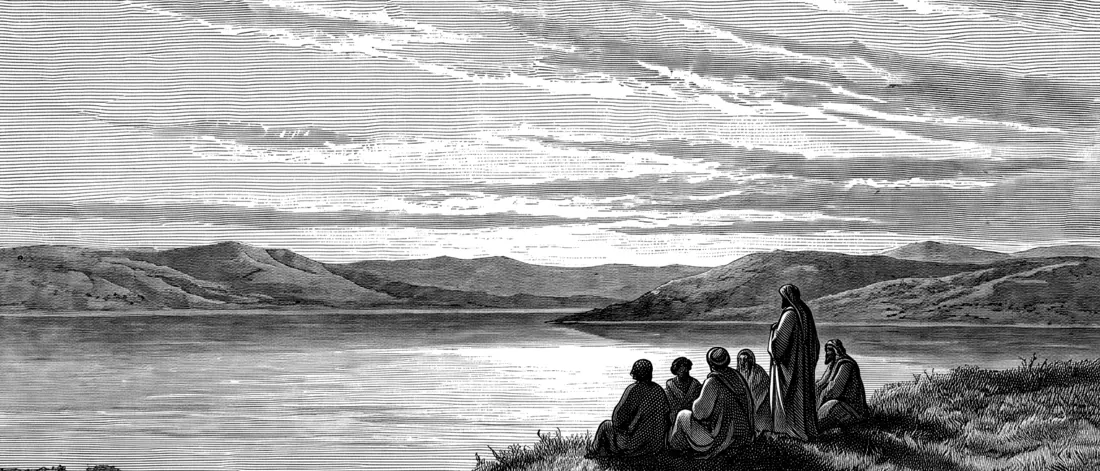
Matthew places the prayer in the middle of the Sermon on the Mount. Jesus has just warned against praying to be seen and against piling up words, because the Father already knows what you need (Matthew 6:5-8). Then he gives a prayer that takes less than a minute to say.
9Pray like this:
“‘Our Father in heaven, may your name be kept holy. 10Let your Kingdom come.
Let your will be done on earth as it is in heaven. 11Give us today our daily bread. 12Forgive us our debts,
as we also forgive our debtors. 13Bring us not into temptation,
but deliver us from the evil one.
For yours is the Kingdom, the power, and the glory forever. Amen.’
Luke tells it differently. Jesus is praying, and when he finishes, a disciple asks him to teach them to pray as John taught his disciples (Luke 11:1). The prayer that follows is shorter.
2So Jesus told them, “When you pray, say:
‘Father, hallowed be Your name.
Your kingdom come. 3Give us each day our daily bread. 4And forgive us our sins,
for we also forgive everyone who sins against us.
And lead us not into temptation.’”
Matthew is shown here in the World English Bible and Luke in the Berean Standard Bible, which follows the oldest manuscripts of Luke. Some translations, including the King James Version, print a longer Luke that later copyists filled out to match Matthew.
Why are Matthew's and Luke's versions different?
Jesus taught about prayer on more than one occasion, and the two Gospels preserve two forms of the same teaching. The Catechism of the Catholic Church describes Luke's text as a brief one of five petitions and Matthew's as a more developed one of seven, and notes that the Church's worship has kept Matthew's (CCC 2759).
The difference is itself instructive. The prayer was handed on as a pattern as well as a text. Tertullian, writing around the year 200, called it a summary of the whole gospel.
In English, the form most people learned comes from the 1662 Book of Common Prayer:
Our Father, which art in heaven, Hallowed be thy Name. Thy kingdom come. Thy will be done in earth, As it is in heaven. Give us this day our daily bread. And forgive us our trespasses, As we forgive them that trespass against us. And lead us not into temptation, But deliver us from evil. (Book of Common Prayer, 1662)
What does each line of the Lord's Prayer mean?
The prayer has an address and seven petitions. The first three are about God; the last four are about us. The order matters: it teaches a person to look up before looking around.
The address: Our Father in heaven
Jesus prayed to God as Abba, the Aramaic word for father used within a family (Mark 14:36), and Paul says the Spirit teaches believers the same word (Romans 8:15). To begin with Father is to begin with trust, before anything has been asked.
The first word is plural. Nobody prays this prayer alone, even when alone in a room. It is always our Father, our bread, our debts.
Heaven here is not an address far away. It says who this Father is: not one more power in the world, but the one above all of them.
First petition: the hallowing of the name
To hallow is to treat as holy. The translation above puts it plainly, as a request that God's name be kept holy.
It is a prayer that God will be known for who he truly is, and it has an edge for the one who prays it. People who carry God's name can honor it or bring it into contempt by how they live.
Second petition: the coming of the kingdom
The kingdom is God's reign, the state of things in which what God wants actually happens. Jesus announced it as near and told his followers to seek it first (Matthew 6:33).
This line looks to the end of history, when that reign will be complete. It is also a prayer for today, in the small territory of one's own life.
Third petition: God's will, on earth as in heaven
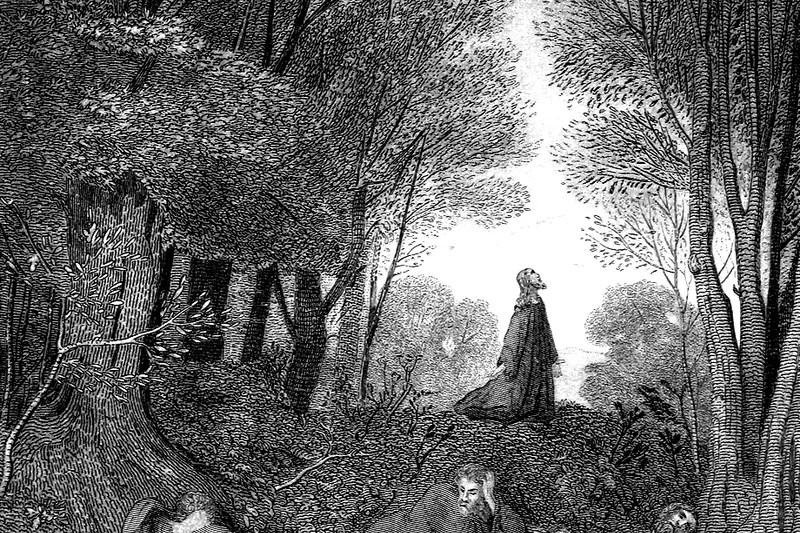
This is the line Jesus himself prayed in Gethsemane, when he asked for the cup to pass and then gave himself to the Father's will (Luke 22:42). It is not resignation. It is consent to a will that is good, offered at a moment when that was costly.
Praying it means asking for earth to look more like heaven, beginning with the person who is praying.
Fourth petition: daily bread
The prayer turns here from God's concerns to ours, and it starts with the body. Bread is bread: food, and with it what a person needs to live.
The word translated daily is unusual. The Catechism observes that the Greek word, epiousios, occurs nowhere else in the New Testament (CCC 2837). The Catechism gives three readings: bread for this day, bread necessary for life, and, taking the word literally, the Bread of Life received in the Eucharist. These readings do not compete.
The line echoes the manna in the wilderness, which was gathered one day's portion at a time (Exodus 16:4). It asks for today's need and leaves tomorrow where Jesus leaves it a few verses later (Matthew 6:34).
Fifth petition: forgiveness, as we forgive
This is the only petition with a condition attached, and the only one Jesus comments on immediately afterward. If you forgive others, he says, your Father will forgive you; if you do not, neither will he (Matthew 6:14-15).
The line does not mean that forgiveness is earned. Jesus' parable of the servant who was forgiven a vast debt and then throttled a fellow servant over a small one shows the logic (Matthew 18:21-35). A heart that refuses to release others has not yet taken in what it has been released from.
Sixth petition: temptation
The Letter of James says plainly that God tempts no one (James 1:13). So this line cannot be asking God to refrain from something he would otherwise do.
The Catechism notes that the Greek verb is hard to render with a single English word: it means both do not allow us to enter into temptation and do not let us yield to it (CCC 2846). The request is for help before the fall, not only pardon after it. Jesus told his disciples in Gethsemane to watch and pray for the same thing (Matthew 26:41).
Seventh petition: deliverance from evil
The Greek can mean evil in general or the evil one. The translation above chooses the second, and the Catechism reads it the same way, as a person and not an abstraction (CCC 2851). Other traditions and translations keep the broader sense.
Either way the prayer ends realistically. It does not pretend the world is safe. It asks to be brought through.
Is it debts, trespasses or sins?
All three are biblical, and each comes from a different verse.
| Wording | Where it comes from | Who commonly says it |
|---|---|---|
| Debts | Matthew 6:12, the literal sense of the Greek | Presbyterian and Reformed churches; the King James Bible |
| Trespasses | Matthew 6:14-15, and Tyndale's 1526 translation of the prayer | Catholics, Anglicans, Lutherans, Methodists |
| Sins | Luke 11:4 | Some modern-language versions of the prayer |
Matthew's word means debts. It pictures sin as something owed that cannot be repaid. Luke writes sins in the first half of the line and keeps the language of debt in the second.
Trespasses entered the English prayer through William Tyndale, whose 1526 New Testament used it in Matthew 6:12 as well as in verses 14 and 15. The Book of Common Prayer adopted that form in 1549 and kept it in 1662, and generations of English speakers learned it there. The King James Version of 1611 has debts, which is why churches formed by that Bible, Presbyterian and Reformed churches among them, say debts. The Orthodox Church in America's prayer book uses trespasses.
The Catechism treats the two Gospel words as two angles on one thing, sins in Luke and debts in Matthew (CCC 2845). You can pray any of the three with a clear conscience.
Why do some churches add "For thine is the kingdom"?
The closing line of praise is called the doxology. It is not in many of the earliest manuscripts of Matthew, which is why some Bibles print it and others move it to a footnote. The King James Version includes it; many modern translations do not.
It is very old all the same. The Catechism says that liturgical usage concluded the prayer with a doxology very early, and points to the Didache, where the ending speaks of the power and the glory. A later text, the Apostolic Constitutions, adds the kingdom (CCC 2760). The wording recalls David's prayer in 1 Chronicles 29:11.
The churches use it differently:
- Protestant churches generally say the doxology as part of the prayer, as the 1662 Book of Common Prayer does in several of its services.
- Catholics end the prayer itself at the petition about evil. At Mass the priest then adds a short prayer, the embolism, which expands that last petition, and the people answer with the doxology.
- Orthodox Christians also end the people's prayer at the last petition. When a priest is present he concludes with a fuller doxology that names the Father, the Son and the Holy Spirit.
So nearly everyone says the doxology. The difference is where, and who says it.
How did the first Christians pray it?
The Didache is a short Christian handbook, usually dated to the late first or early second century. Its eighth chapter gives the prayer in a form close to Matthew's, with debt in the singular and the short doxology, and then adds a simple instruction: pray this way three times a day.
That is the earliest rule of prayer outside the New Testament, and it is modest. No long hours are asked. A person stops three times in a day and says the words Jesus gave.
How can you pray the Lord's Prayer slowly?
Familiar words slide past. These steps slow them down.
- Say the address and stop. Stay with the word Father for a few breaths before going on.
- Take one petition a day. Seven petitions fit a week. On Monday, pray the whole prayer but linger on the name; on Tuesday, the kingdom; and so on.
- Put a name into the fifth petition. When you reach forgiveness, think of one person you find it hard to release, and say the line for them.
- Pray it at fixed times. Morning, midday and evening, as the Didache suggests.
- End in silence. After the last line, wait a moment before returning to the day.
The prayer also sits inside other ways of praying. It opens each decade of the Rosary, it can be prayed phrase by phrase in the manner of Lectio Divina, and its brevity has something in common with the Jesus Prayer.
In Emmaus you can open Matthew 6 and compare translations side by side, which is a quick way to see debts, trespasses and the doxology for yourself. You can also keep the prayer among your memory verses.
The disciples did not ask for a lecture on prayer. They asked to be taught to pray, and they were given these lines. They are enough to begin with, and they have turned out to be enough for a lifetime.
Questions
Where is the Lord's Prayer in the Bible?
The Lord's Prayer appears twice. In Matthew 6:9-13 Jesus gives it during the Sermon on the Mount, as part of his teaching on praying without show. In Luke 11:2-4 he gives a shorter form after a disciple asks him to teach them to pray. Churches have used Matthew's longer version in worship since the earliest centuries.
Is it debts, trespasses or sins?
All three come from the Bible. Matthew's version uses a Greek word that means debts, Luke's version says sins, and in the two verses right after the prayer in Matthew, Jesus speaks of forgiving trespasses. William Tyndale's 1526 English New Testament put trespasses into the prayer itself, and the Book of Common Prayer carried that wording into English worship.
Why do Catholics stop before 'For thine is the kingdom'?
The closing doxology is absent from many early manuscripts of Matthew, so the Catholic form of the prayer ends with the petition about evil. Catholics still say the doxology at Mass: after the Our Father the priest adds a short prayer called the embolism, and the people answer with the words about the kingdom, the power and the glory.
What does 'daily bread' mean?
Daily bread means what you need for today: food first, and with it everything necessary for life. The Greek word behind daily, epiousios, appears nowhere else in the New Testament, so its exact sense is debated. The Catechism of the Catholic Church gives three readings: bread for this day, bread necessary for life, and the Bread of Life received in the Eucharist.
Does God lead people into temptation?
No. The Letter of James says plainly that God tempts no one. The Catechism of the Catholic Church notes that the Greek verb in this line is hard to translate with one English word and means both do not allow us to enter temptation and do not let us yield to it. The line is a request for help in the hour of testing.
How often did the first Christians pray the Lord's Prayer?
The Didache, a short Christian handbook usually dated to the late first or early second century, gives the prayer in a form close to Matthew's and tells believers to pray it three times a day. Many Christians still follow that rhythm, praying it in the morning, at midday and in the evening.
Sources
- Catechism of the Catholic Church, 2759–2760 (the two versions and the doxology)
- Catechism of the Catholic Church, 2761 (Tertullian: the summary of the whole gospel)
- Catechism of the Catholic Church, 2838–2845 (forgiveness; sins and debts)
- Catechism of the Catholic Church, 2803–2806 (the seven petitions)
- Catechism of the Catholic Church, 2828–2837 (daily bread)
- Catechism of the Catholic Church, 2846–2854 (temptation and evil)
- Catechism of the Catholic Church, 2855–2856 (the final doxology)
- The Didache, chapter 8 (New Advent)
- The Book of Common Prayer (1662), Morning Prayer
- Tyndale New Testament (1526), Matthew 6
- Orthodox Church in America: Trisagion Prayers
- Orthodox Church in America: The Divine Liturgy, Our Father
- Wikipedia: Lord's Prayer (liturgical use by tradition)